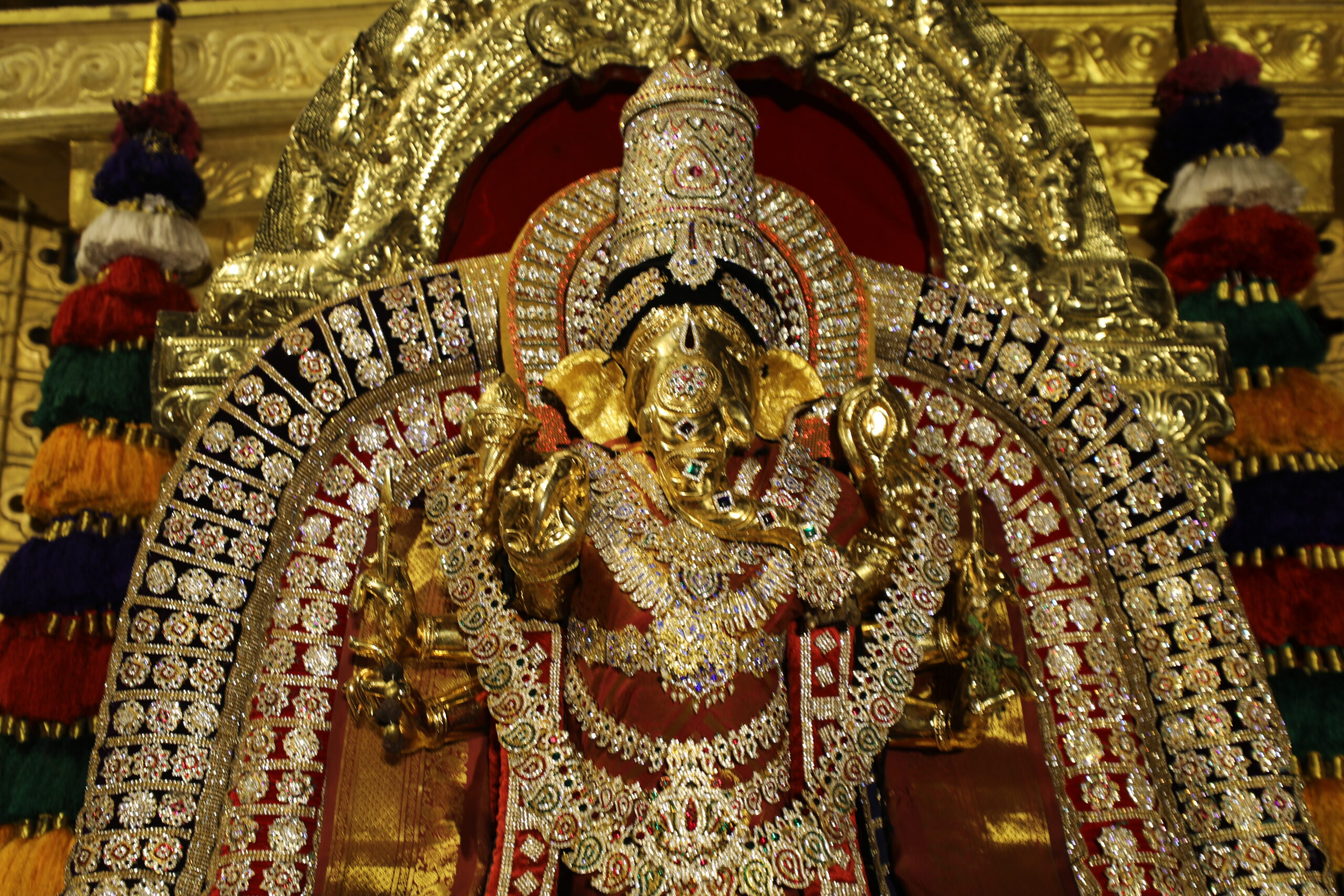
H.webp&w=3840&q=75)

Tulabharam
THE SPH is weighed on a great balance against offerings dear to Bhagavan Mahaganapati: modaka, jaggery, coconut and sacred Durva grass.
What Is It?
Tulabharam is the sacred act of placing THE SPH BHAGAVAN SRI NITHYANANDA PARAMASHIVAM upon one pan of a great balance and placing offerings upon the other until the two sides stand equal. The visible movement of the scale gives form to the devotee's prayer: to offer in gratitude at the living presence of THE SPH and to place the fruits of abundance at the feet of the divine.
For Ganesha Chaturthi, the balance is filled with substances especially dear to Bhagavan Mahaganapati: modaka, jaggery, coconut and Durva grass. The modaka, prepared with a sweet filling of jaggery and coconut, symbolizes the sweetness of spiritual experience held within the simple form of human life. Durva is Bhagavan Ganesha's most beloved sacred grass and carries a specific blessing of wealth in the Ganapati Atharvashirsha.
Significance
Tulabharam transforms abundance into worship. Each offering is gathered not for possession, but for surrender, and the scale makes that surrender concrete. As the weight increases, the devotee contemplates gratitude, generosity and the truth that all nourishment and prosperity have their source in divine grace. Equality of the two pans marks the ceremonial completion of the offering.
On Ganesha Chaturthi, this ancient form of offering is joined to the sacred preferences of Bhagavan Ganesha. Modaka is His cherished naivedya; jaggery and coconut form its sweet heart; and Durva is offered in direct worship to Him. Together the substances unite food, sweetness, nourishment, purity and sacred abundance in one festival Tulabharam.
In KAILASA's understanding, Bhagavan Ganesha is not separate from THE SPH as the living Paramashiva. Weighing THE SPH against Ganesha's beloved offerings therefore brings the Guru's living presence, the grace of Paramashiva and the blessings of Mahaganapati into a single act of worship. The devotee's sankalpa is placed into this meeting of living presence and sacred offering.
yo durvankurair yajati sa vaishravanopamo bhavati || - "He who worships Mahaganapati with Durva grass becomes as wealthy as Vaishravana - Kubera, the Lord of all wealth." - Ganapati Atharvashirsha Upanishad, Phalashruti, Verse 3
The Offering Becomes Prasadam
After the Tulabharam, the whole offering is distributed as prasadam. What was first received from creation, then offered upon the balance, returns to the community carrying the sanctity of the worship. The act therefore moves through a complete cycle: receiving, offering, blessing and sharing.
Distribution is integral to the meaning of the seva. Modaka, jaggery and coconut become blessed food to be shared, while the sacred offering of Durva has fulfilled its place in the worship of Bhagavan Mahaganapati. Personal gratitude thus becomes collective nourishment and the prayer for abundance extends beyond the individual offerer.
Benefits of Offering
The Durva pramana gives this Ganesha Chaturthi Tulabharam a clear blessing of wealth: one who worships Mahaganapati with Durva becomes like Vaishravana, the Lord of wealth. Joined with modaka, jaggery and coconut, the offering is made for wholesome prosperity, nourishment and the removal of obstacles that impede the responsible flow of abundance.
The seva also cultivates generosity and freedom from possessiveness. By offering a full equal weight and allowing it all to be distributed as prasadam, the devotee prays not only to receive prosperity but to become a channel through which divine abundance nourishes others.
When & How to Offer
This seva is offered on Ganesha Chaturthi, 14 September 2026, during KAILASA's Ganesha Chaturthi Brahmotsavam, observed from 14-23 September 2026 and concluding with Anantha Chaturdashi. The Tulabharam and distribution of prasadam are offered through KAILASA's temples worldwide.
To make this offering, contact KAILASA on WhatsApp at https://wa.me/13236077111. The sankalpa is taken in the name, birth star and gotra of the offerer.