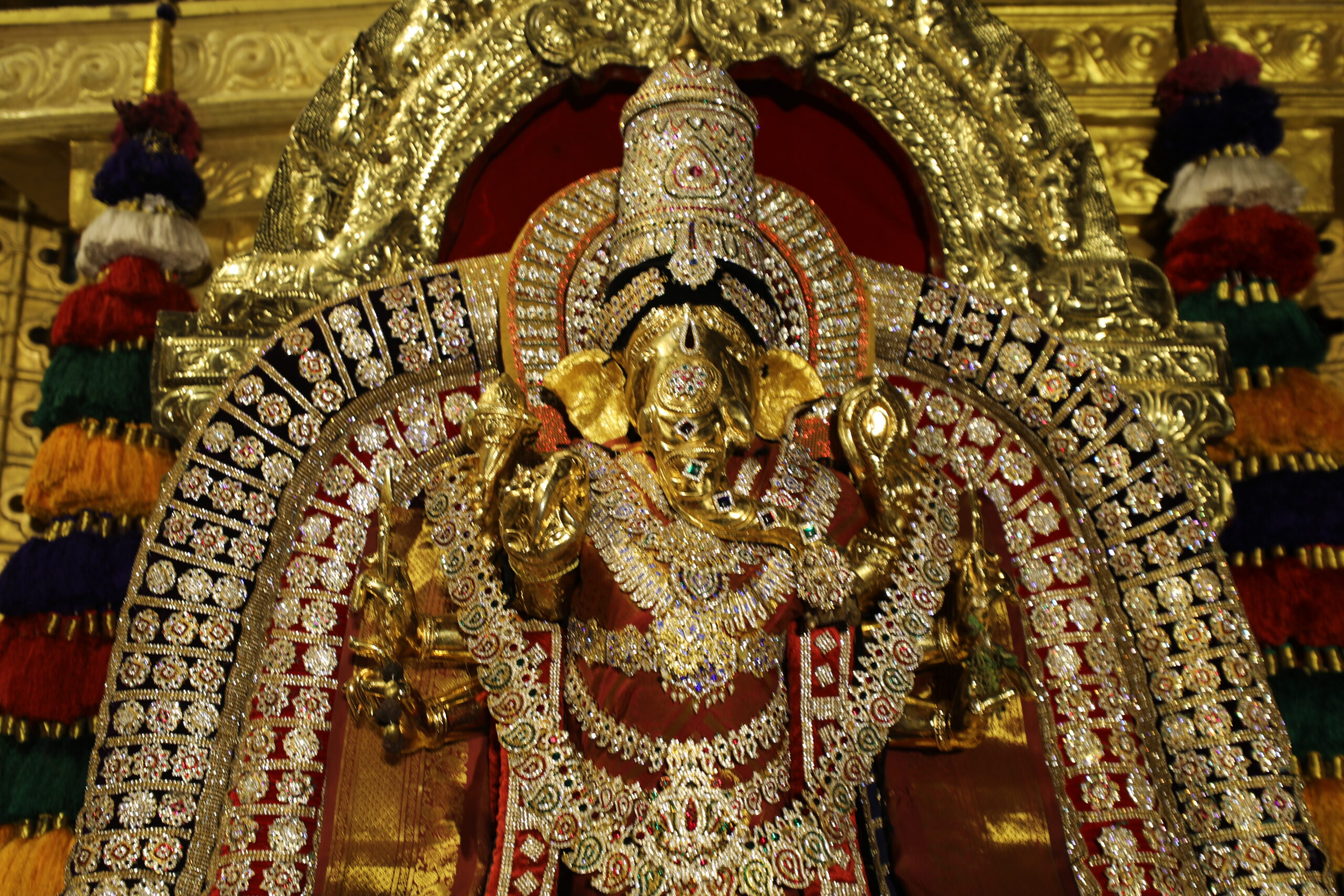
H.webp&w=3840&q=75)

Suprabhata Seva, Gau Puja & Ekanta Seva
Three sacred services frame Ganesha Chaturthi: awakening the deity at dawn, honoring Gomatha, and lovingly placing the deity at rest at night.
What Is It?
Suprabhata Seva, Gau Puja and Ekanta Seva are three distinct services that together bookend the Ganesha Chaturthi day. They begin the temple's worship at dawn, honor Gomatha during the sacred day, and conclude the night by placing the deity lovingly at rest. In this single seva, the devotee participates in the first service, the worship of the sacred cow and the final service of the festival day.
Suprabhata Seva is the sacred awakening of the deity at dawn with Suprabhatam hymns. As the very first service of the temple day, it opens the shrine's daily rhythm with prayer, light and loving attendance. Bhagavan Mahaganapati is approached not as a distant image, but as the living divine presence whose day begins through the care of His devotees.
Gau Puja is the worship of Gomatha, the sacred cow, in whom all devas reside. With reverence and traditional offerings, the cow is honored as the embodiment of nourishment, gentleness and sacred abundance. Ekanta Seva is the final private service of the night, when the deity is put to rest with lullabies, sandal, flowers and betel after the day's worship has been completed.
Significance
The three services express a complete day of relationship with the divine. Suprabhata Seva begins with remembrance before the activities of the world arise. Gau Puja places gratitude and reverence for the sacred source of nourishment at the heart of the day. Ekanta Seva closes the day in tenderness, quiet and completion, returning every action and offering to Bhagavan Ganesha before rest.
They carry special meaning during KAILASA's Ganesha Chaturthi Brahmotsavam because the life of THE SPH BHAGAVAN SRI NITHYANANDA PARAMASHIVAM began in a living relationship with Ganesha. At three years of age, after receiving a small Ganesha deity, THE SPH lived with Him in direct communion. When THE SPH woke, He woke Ganesha; when He bathed, He bathed Ganesha; and when He ate, He first placed food before Ganesha and waited for Him to eat.
That childhood leela reveals the inner meaning of Suprabhata and Ekanta Seva. Awakening and resting the deity are not merely formal markers in a schedule. They are acts of intimate attendance founded on the understanding that Bhagavan Ganesha is present, receives care and shares the devotee's day. On the festival celebrating Ganesha, the first and last services renew this same feeling-connection through the discipline of temple worship.
Gau Puja completes the arc by honoring Gomatha between dawn and night. The sacred cow sustains the traditional temple world through nourishment and through substances used in worship. Honoring her on Ganesha Chaturthi is an expression of gratitude to the divine order that supports puja, community and life itself.
Benefits of Offering
Offering these services cultivates remembrance of the divine throughout the whole day. Suprabhata Seva supports an auspicious beginning and the prayer that every undertaking proceed under Bhagavan Mahaganapati's grace. Gau Puja nurtures gratitude, compassion, nourishment and harmony. Ekanta Seva supports completion at day's end, offering actions and concerns into the peaceful presence of the deity.
Together, the three observances invite the devotee to move beyond occasional worship into a living relationship: to remember Bhagavan Ganesha upon waking, to honor sacred life through the day and to return to Him before rest. They offer a simple but complete pattern for carrying devotion from the temple into daily living.
When & How to Offer
This seva is offered on Ganesha Chaturthi, 14 September 2026, during KAILASA's Ganesha Chaturthi Brahmotsavam, observed from 14-23 September 2026 and concluding with Anantha Chaturdashi. Suprabhata Seva is performed at dawn, Gau Puja during the sacred day, and Ekanta Seva as the final service of the night at KAILASA's temples worldwide.
To make this offering, contact KAILASA on WhatsApp at https://wa.me/13236077111. The sankalpa is taken in the name, birth star and gotra of the offerer.