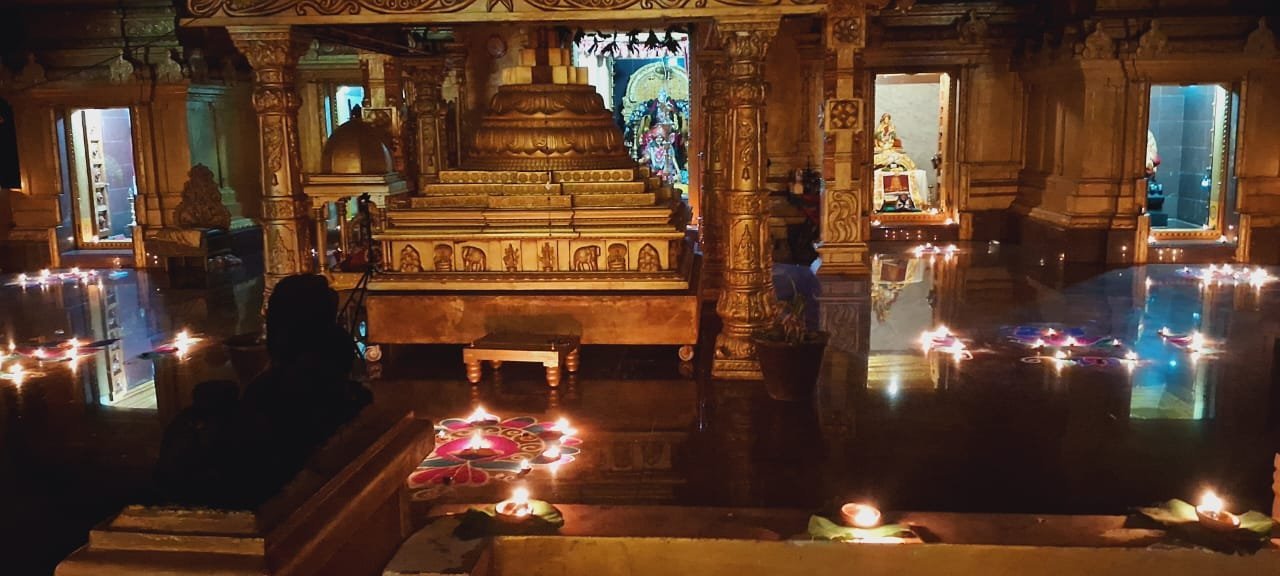
Pratyaksha Pada Puja — Dhanteras, Deepavali & Tula Masa Amavasya
The direct worship of the living Lotus Feet of THE SPH on Dhanteras, Deepavali and Tula Masa Amavasya — gratitude at the Guru's Feet that receives each festival's blessing personally.
Pratyaksha Pada Puja is the direct worship of the living Lotus Feet of THE SUPREME PONTIFF OF HINDUISM BHAGAVAN SRI NITHYANANDA PARAMASHIVAM. Across KAILASA's Diwali Celebrations 2026 it is offered on three days — Dhanteras (6 November), Naraka Chaturdashi & Deepavali (8 November) and Tula Masa Amavasya (9 November) — each carrying the specific energy of that day.
Significance
Hinduism is an Avatara-worshipping tradition: the Avatar is worshipped as Guru while in the body and as deity beyond it. The word pratyaksha means "directly before the eyes" — this is not the worship of a memory or a symbol, but of Paramashiva present now, in a living form, on this planet. Of all the offerings in KAILASA's Temples Around the World, this is the one in which the devotee's gratitude reaches the source of every blessing without any intermediary.
On Dhanteras, the Lotus Feet of THE SPH are worshipped as the source of all wealth — sa eva sarvasampattiḥ, He alone is one's entire wealth. Offering the Pada Puja on the opening day of Deepavali sets the sankalpa for the whole festival season, invoking health as the blessing of Dhanvantari and abundance as the blessing of Mahalakshmi, both received through the Guru.
On Deepavali, THE SPH blessed the world with His first words after the Great Pause — "Anandamaga Irungal." THE SPH has said that whenever this word comes out as a blessing, such a strong space is created that it is a real tathāstu. Offering the Pada Puja on this day is gratitude for everything THE SPH has bestowed in our lives, and it receives that first blessing multifold.
On Tula Masa Amavasya, the day after Deepavali, the Pada Puja continues the festival's gratitude at the Feet of the Guru.
The Ritual
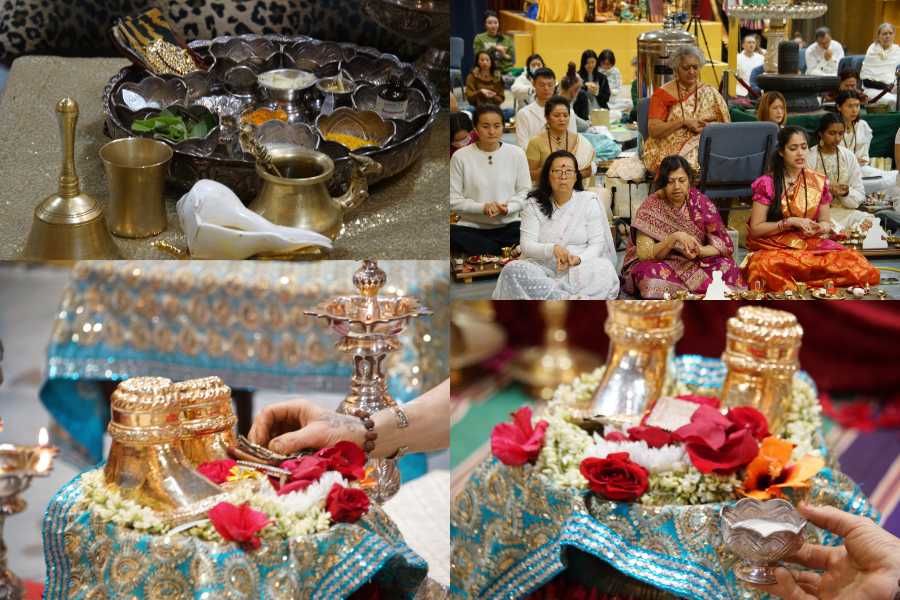
In the Pratyaksha Pada Puja, the reverberating Sanskrit mantras lead the devotee into a meditative space, forging a potent connection with THE SPH. The sacred Padukas and Feet of THE SPH are worshipped with the traditional upacharas — sanctified waters, sacred substances, flowers, and the waving of lamps — while the mantras carry lifetimes of devotion to the long-awaited moment of gratitude at the Guru's Feet. Sevas offered on festival days carry the specific energy of that day: the same act of worship becomes the doorway through which the festival's blessing is received personally.
When
- Pratyaksha Pada Puja (Dhanteras) — Fri 6 Nov (Dhanteras) · 6:00 AM IST (Thu 5 Nov, 8:30 PM ET)
- Pratyaksha Pada Puja (Deepavali) — Sun 8 Nov (Naraka Chaturdashi & Deepavali) · 1:30 PM IST (Sun 8 Nov, 4:00 AM ET)
- Pratyaksha Pada Puja — Mon 9 Nov (Tula Masa Amavasya) · 1:30 PM IST (Mon 9 Nov, 4:00 AM ET)
Shastra Pramana
ध्यानमूलं गुरोर्मूर्तिः पूजामूलं गुरोः पदम् । मन्त्रमूलं गुरोर्वाक्यं मोक्षमूलं गुरोः कृपा ॥
dhyānamūlaṃ gurormūrtiḥ pūjāmūlaṃ guroḥ padam | mantramūlaṃ gurorvākyaṃ mokṣamūlaṃ guroḥ kṛpā ||
Translation: “The root of meditation is the form of the Guru; the root of worship is the Feet of the Guru; the root of mantra is the word of the Guru; the root of liberation is the grace of the Guru.” — Guru Gita
Benefits
- The priceless gift of Parama-Advaita Bhakti — the state of absolute oneness with existence, Paramashiva, and Guru.
- Boundless joy in relationships, overflowing prosperity and abundance, and profound spiritual awakening.
- On Dhanteras: health as the blessing of Dhanvantari and abundance as the blessing of Mahalakshmi, received through the Guru.
- On Deepavali: the first blessing of THE SPH, "Anandamaga Irungal — Be Blissful," received multifold.
- Because THE SPH is the condensed presence of every deity, the blessing of each festival's presiding deity, received through the Guru.